

Retargeting vs Remarketing: What's the Difference and When to Use Each
27 September 2026 · Yogender Kumar, Managing Partner
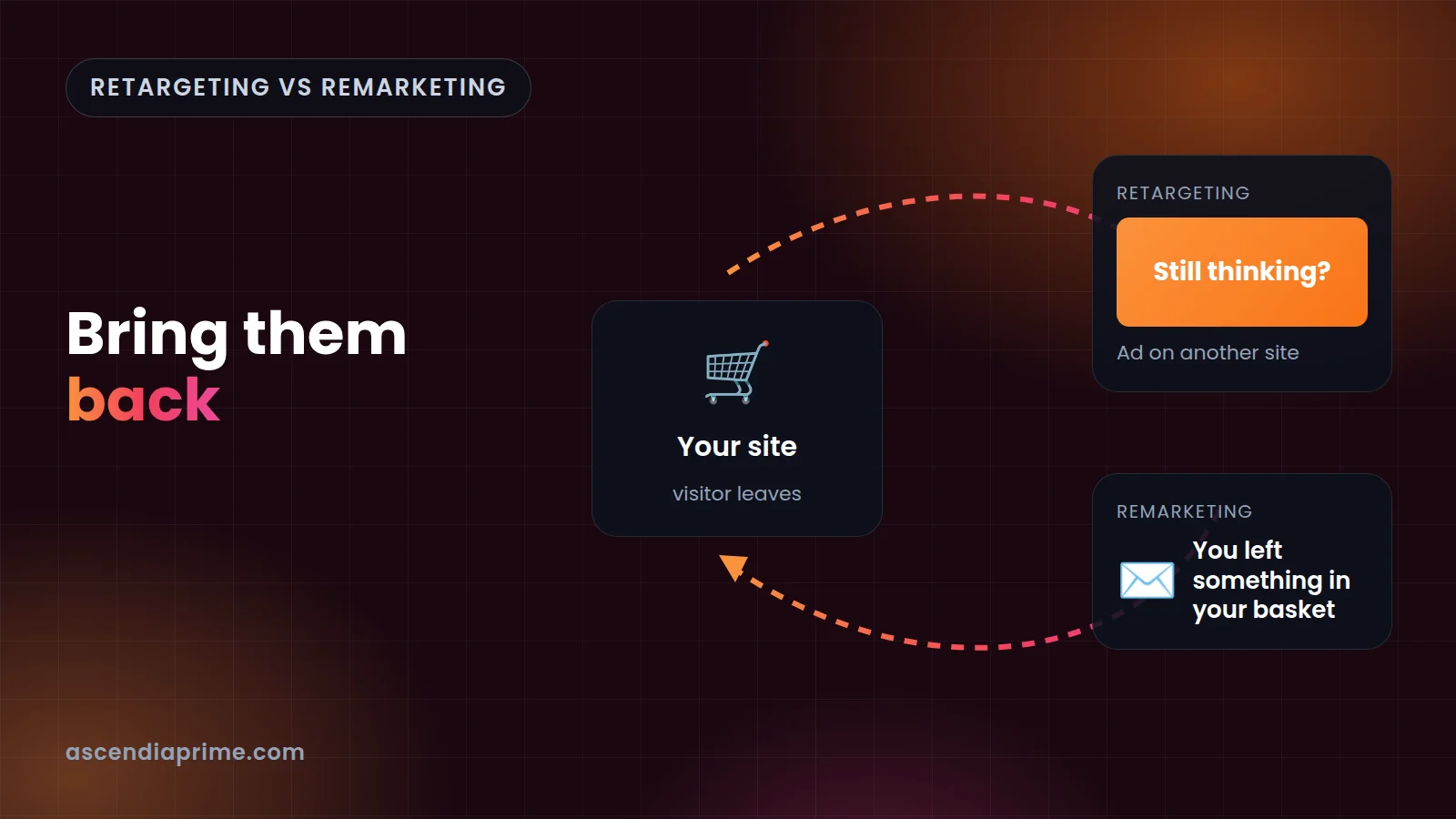
Most people who visit your website leave without buying. That's normal. What matters is how you bring them back, and that's where retargeting and remarketing come in.
People often use the two words as if they mean the same thing. They overlap, but there's a useful difference, and knowing it helps you plan.
The short version
Retargeting usually means showing paid ads to people who've visited your site or app, while they browse other websites, social media or streaming services.
Remarketing traditionally means getting back in touch with people whose details you already have, usually by email or text. Think basket reminder emails or "we miss you" offers.
To make things more confusing, Google calls its ad-based retargeting "remarketing". The easiest way to keep them apart is by channel. Retargeting uses paid media to reach anonymous visitors. Remarketing uses your own channels to reach people you know.

How retargeting works
When someone visits your site, a tag or first-party signal adds them to an audience. You can then reach that audience through Google Ads and YouTube, through Meta, TikTok, LinkedIn and other social platforms, or through programmatic display, video, native and connected TV bought via a DSP.
Because these people already know who you are, they convert far more readily than cold audiences.
How remarketing works
Remarketing uses contact details customers have given you, with their permission. The classics are basket and browse abandonment emails, post-purchase follow-ups (cross-sells, replenishment reminders), win-back offers for lapsed customers, and loyalty or referral campaigns.
The types of retargeting worth knowing
Site retargeting reaches everyone who visited, usually split by which pages they looked at. Dynamic product retargeting shows people the exact products they viewed. Search retargeting reaches people who searched for relevant terms, even if they never came to your site. Customer-list retargeting uploads your (securely hashed) customer list so you can reach existing customers in paid media. Engagement retargeting reaches people who watched your videos or interacted with your posts.
When to use which
It usually comes down to what you know about the person.
If an anonymous visitor left without buying, use retargeting. If a logged-in customer abandoned their basket, send a remarketing email first and follow up with retargeting. A lapsed customer who's still subscribed is a remarketing job. If they've unsubscribed, a customer-list retargeting campaign is the respectful way to stay visible. For a new product launch aimed at past buyers, use both.
The strongest setups run both together, with shared rules so nobody gets chased on every channel at once. There's a fine line between a helpful reminder and feeling followed.
What good looks like
Segment by intent. Someone who reached checkout deserves a different message from someone who skimmed one blog post.
Cap frequency. Too many impressions annoy people and waste money.
Stop showing acquisition ads to people who've just bought. Switch them to something useful, like a cross-sell or a how-to.
Pick sensible time windows. A few days suits impulse purchases, and several weeks suits considered ones like holidays or insurance.
Keep creative fresh so the ads still feel relevant.
Respect consent. In the UK and EU, retargeting tags and marketing emails need appropriate consent under PECR and GDPR, and it's worth getting right.
And measure properly. Retargeting is very good at claiming credit for sales that would have happened anyway, so test it against a holdout group.
Where to start
Start small with two or three audiences, for example all visitors, product viewers and basket abandoners, each with a clear message. Measure against a holdout group, then build from there.
If you'd like to see how intent-led retargeting could work for you, have a look at our retargeting campaigns or get in touch.