

Cashback and Voucher Affiliates: When They Help and When They Don't
30 September 2026
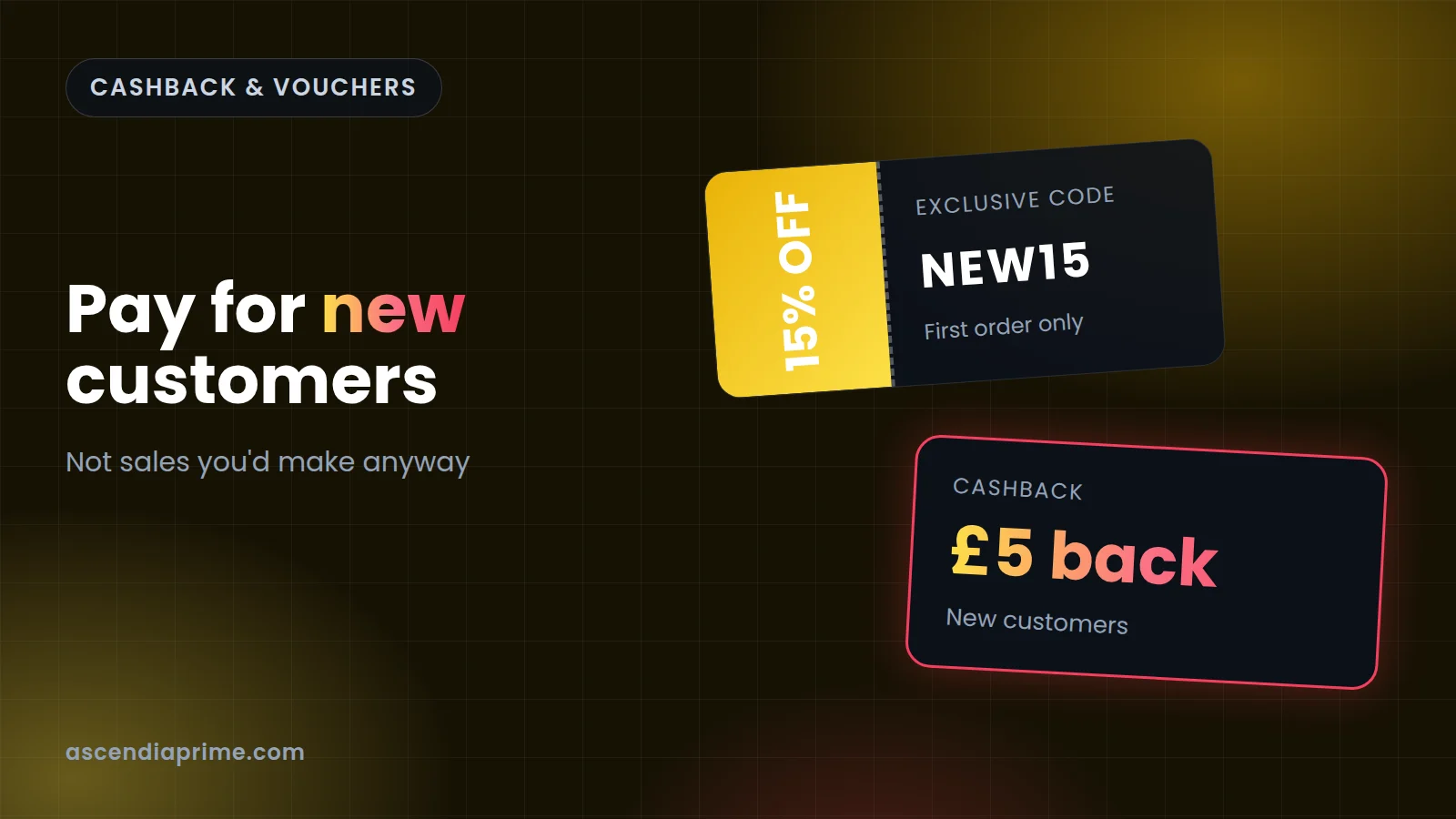
Cashback and voucher sites are some of the biggest affiliates in the UK. Names like TopCashback, Quidco and VoucherCodes are household brands, and in many retail programmes they drive a large share of sales. They're also the partners brands argue about most.
The question is always the same: are they bringing in new customers, or are they taking commission on sales that were going to happen anyway? The honest answer is both, and the job is to pay for the first and not the second.
How these partners work
Cashback sites share part of their commission with the shopper. The customer starts on the cashback site, clicks through to your store, buys, and gets money back later. Loyal cashback users often check the site before every purchase.
Voucher sites list discount codes and offers. Shoppers visit them to find a deal, sometimes early in their search and sometimes at the very last step, when they see a code box at checkout.
Loyalty and reward schemes work in a similar way, paying points or rewards instead of cash.
When they genuinely help
- Winning new customers. Many cashback users choose between retailers based on the rate on offer. A good rate or an exclusive code can win a first order from someone who'd never have found you.
- Converting undecided shoppers. An offer can tip someone who was comparing you with a competitor.
- Larger baskets. Spend thresholds, such as 15% off orders over £75, can lift average order values.
- Launches and peaks. Featured placements around sales events can move volume quickly when you need it.
When they don't
- Last-minute code searches. A customer is already in your checkout, sees a code box, searches for a code and finds one. The sale was going to happen. You now pay a discount and a commission on it.
- Existing customers. Loyal customers who would have bought anyway, now paid for through a partner.
- Leaked codes. Codes meant for one audience, such as email subscribers or a specific creator's followers, appearing publicly.
- Margin squeeze. Stacking a discount, a cashback payment and a commission can leave very little profit on the order.

Controls that keep it profitable
Pay different rates for new and existing customers. Most networks can pass a new or returning flag. A higher commission for new customers and a lower one for existing customers rewards partners for growth, not repeat orders.
Use exclusive, trackable codes. Give each partner its own code, make exclusive offers single-use where you can, and check that codes are only used where they should be.
Control your checkout code box. A prominent code box sends people off to search. A smaller link, or showing current offers directly in the basket, keeps them on your site.
Set rules on what partners can do. Agree whether partners can use your brand name in paid search, add browser extensions that appear at checkout, or publish codes you haven't approved. Our guide to affiliate fraud and traffic quality covers the common problems.
Look at the whole journey. Last-click reports give all the credit to whoever was last. Check how often these partners appear earlier in the journey, and how often they only appear at the final step.
Test the real impact. The most reliable check is a controlled test: change an offer or commission for a period, or in some categories only, and compare results against a similar period or group.
Getting the balance right
Cutting cashback and voucher partners altogether usually costs you sales, because many shoppers genuinely choose where to buy based on them. Letting them run unchecked usually costs you margin. The right answer sits in between clear rules, the right rates for the right customers, and regular checks on what's really incremental.
If you're not sure what share of your affiliate sales is genuinely new, have a look at how we run affiliate and publisher marketing, or start a conversation and we'll take a look at your programme.